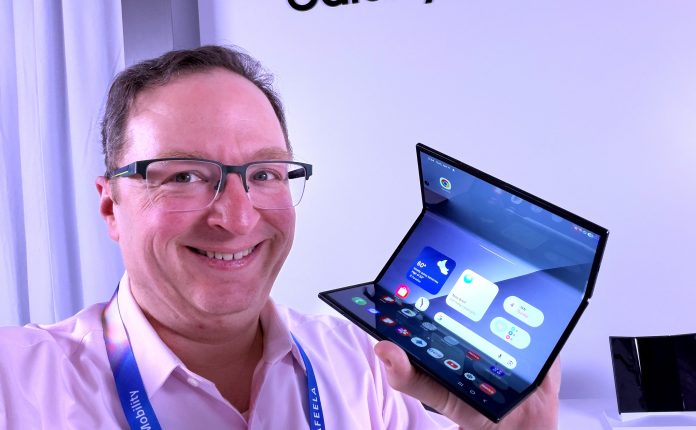
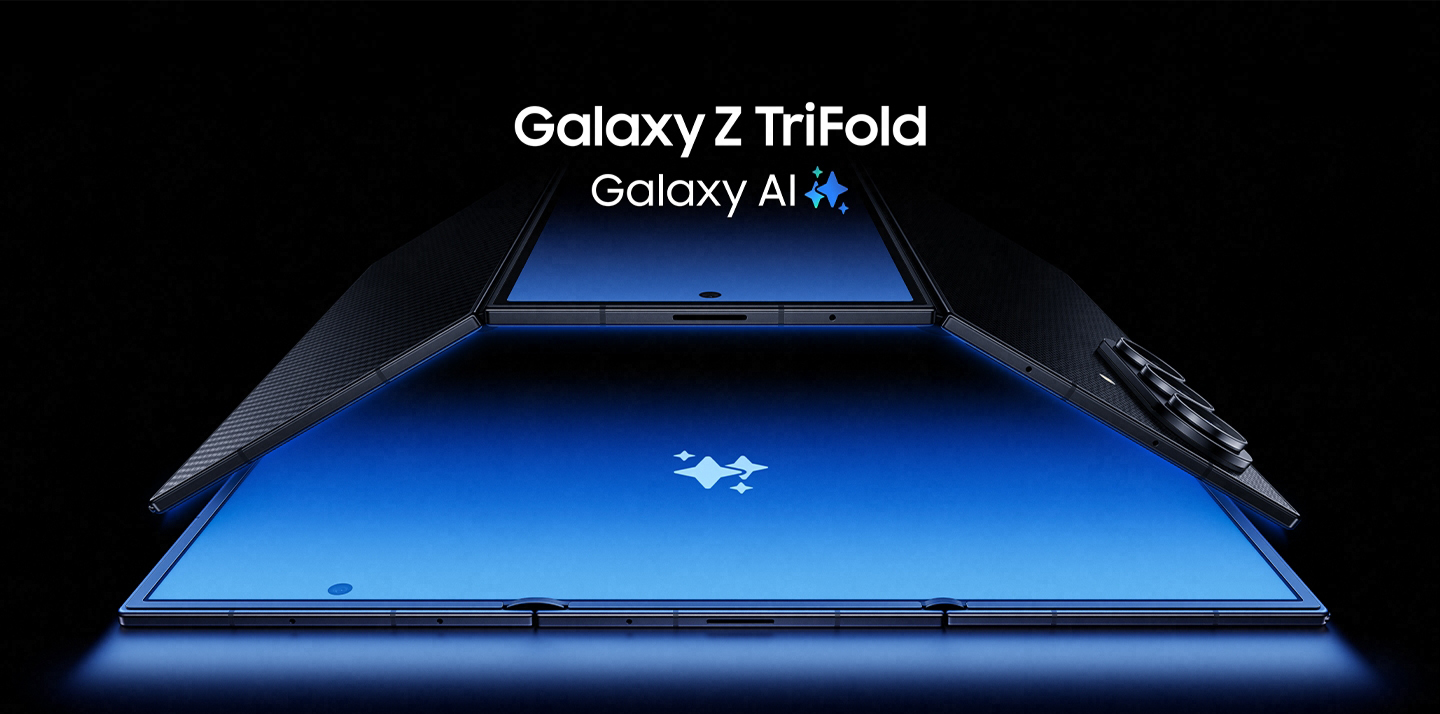
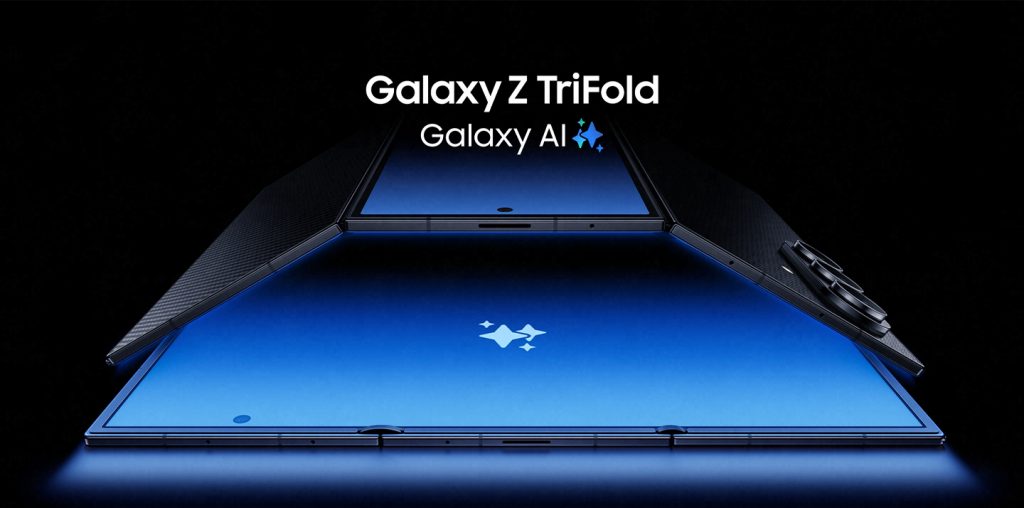
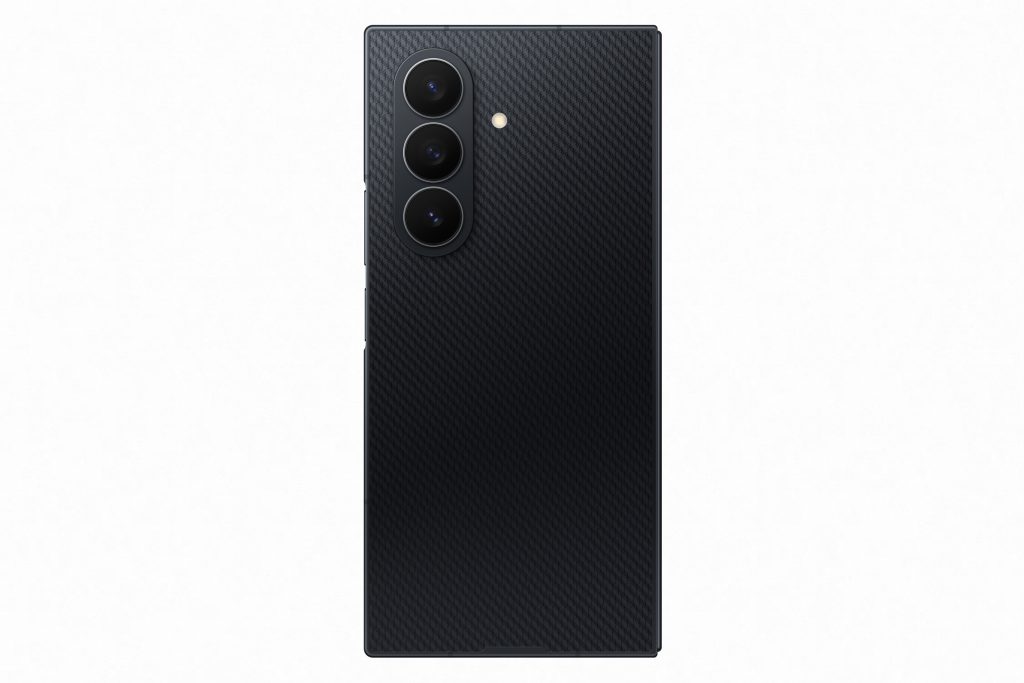
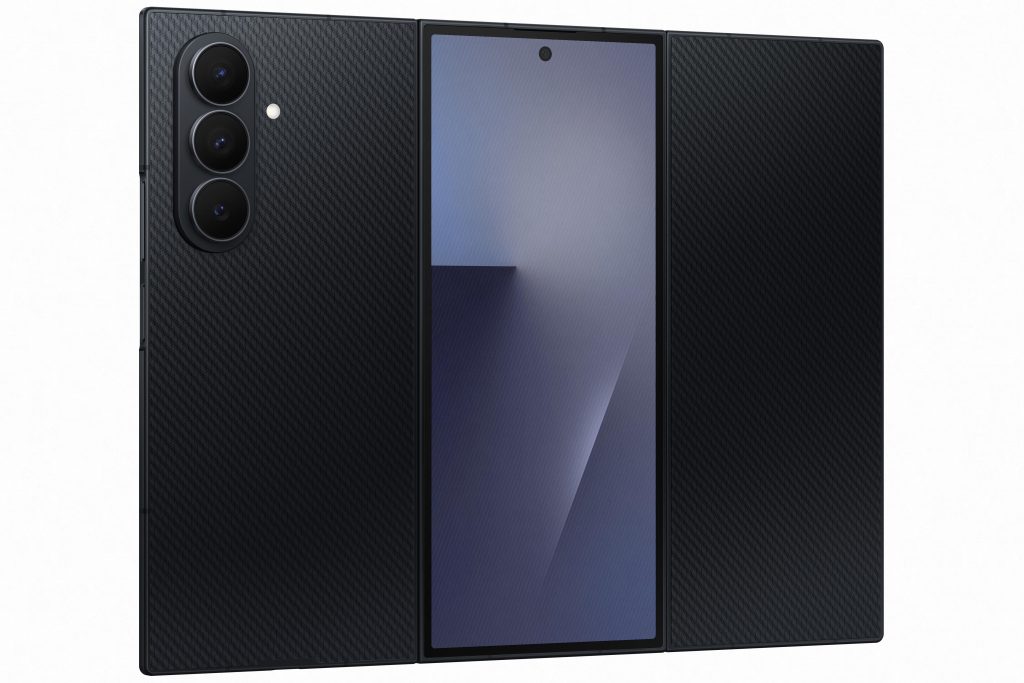
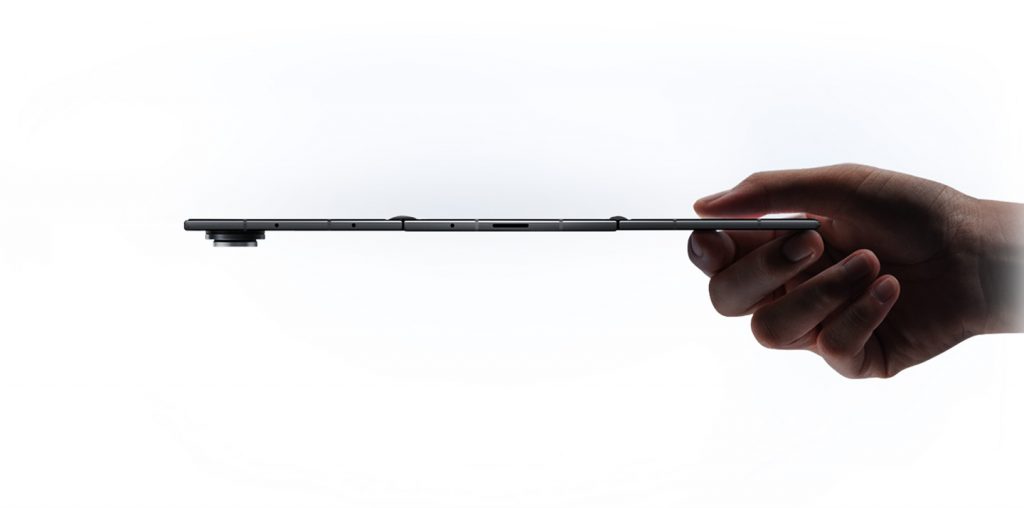
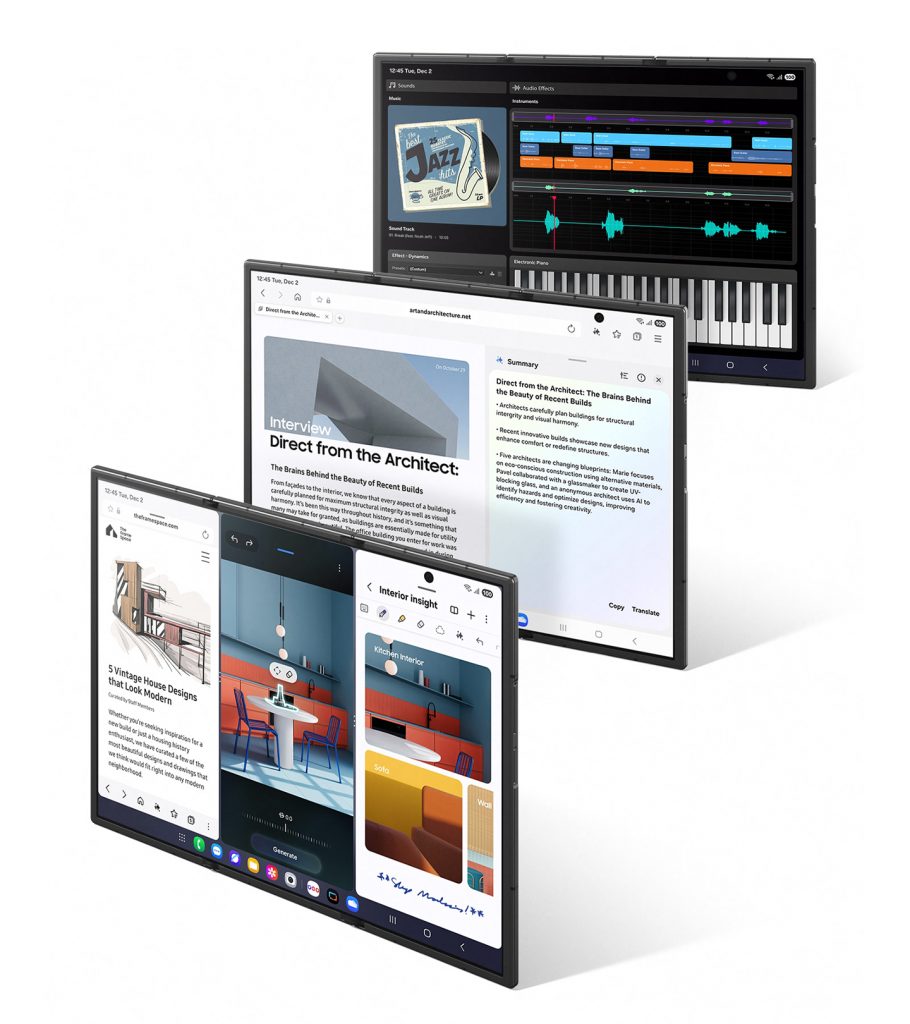
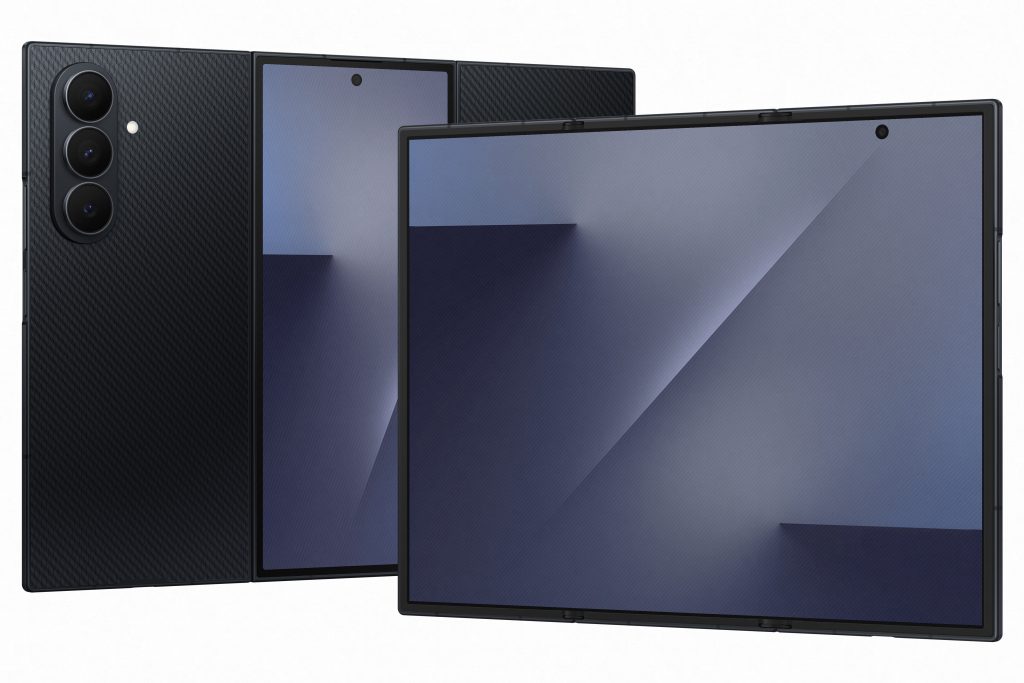
Samsung just announced the foldiest of its foldable phones yet: a 6.5″ phone that folds out in two directions into a 10″ tablet. The 2160 x 1584 inner screen can be configured with three 6.5” phone-sized app windows or any number of other configurations, including a fully windowed on-device DeX environment. When open, it is just 3.9 mm thick; closed it is 12.9mm, roughly equivalent to a Galaxy S25 Ultra in a case. It weighs 309g, about a third heavier than a Galaxy S25 Ultra with that case. Like the Galaxy S25 Ultra, the Galaxy Z TriFold is powered by a Qualcomm Snapdragon 8 Elite for Galaxy. Samsung is using dual titanium hinge housings, the frame is supported by Advanced Armor Aluminum, and ceramic-glass fiber-reinforced polymer back panels ensure rigidity and protection without bulk. The entire chassis is rated IP48, so it should be able to manage splashes and rain. The cameras being used are identical to the Galaxy Z Fold7, so it is easy to predict that the main 200 MP camera should be excellent, while the wide angle and 3x optical zoom cameras are good. If you don’t spend all day on the inner screen, battery life as a phone should be even better: the three battery segments add up to 5600 mAh. Samsung managed to squeeze in a wireless charging pad for 15W wireless and 45W wired charging. A 45W power brick is included in the box (at least in the versions given to tech YouTubers for first looks).
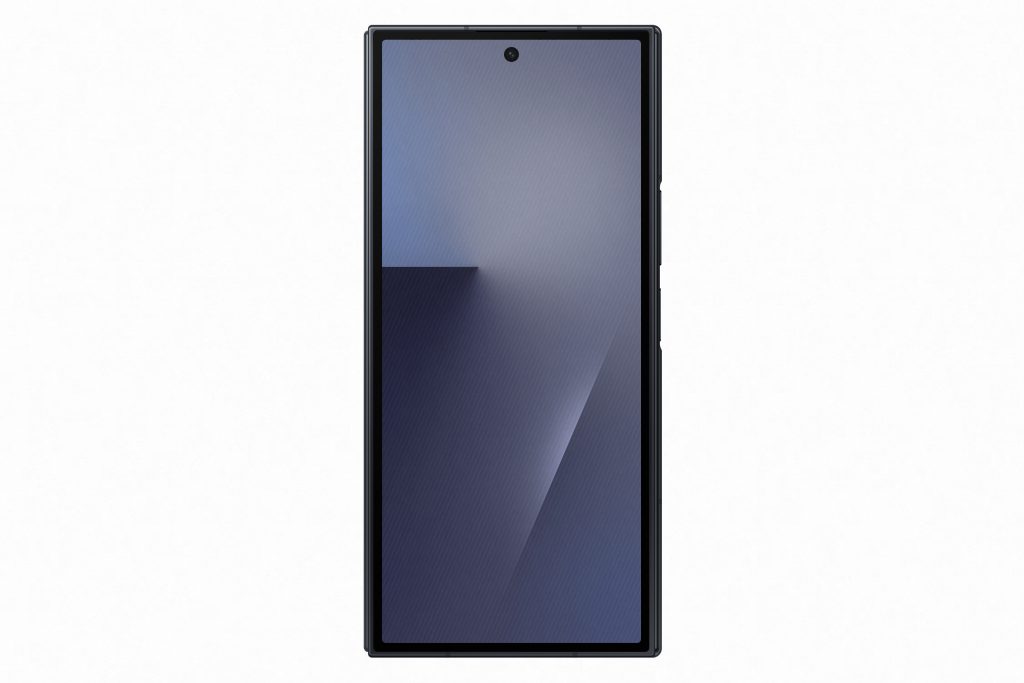
Samsung places the outer screen in the middle of the three segments, and it is the same size display as the Galaxy Z Fold7, only in a much thicker and heavier body. This is a normal aspect ratio, and it will feel like a normal, thick phone while closed. That display is covered in Gorilla Glass Ceramic 2; it should be fine when exposed to the elements or whatever is in your pocket. However, Samsung wants to baby the large, soft inner folding display, which is why its design keeps the entire screen folded away until ready for use. Huawei’s tri-fold design uses a segment of the inner display as the “phone” portion; this allows you to selectively use 1/3, 2/3, or the entire display as you wish but you always risk damaging the soft screen material. In contrast, the Galaxy Z TriFold can be a phone or a tablet, but nothing in between. Samsung uses magnets and slightly longer sides to make it easy to unfold it correctly; if you fold it back in the wrong order the phone alerts you through haptics and on-screen messages to stop.
The Galaxy Z TriFold launches in Korea on December 12, followed by other markets including China, Taiwan, Singapore, and the UAE. It will arrive in the U.S. in 1Q26. Pricing outside of Korea has not been announced, but it would be reasonable to expect that the Galaxy Z TriFold will cost somewhere in the neighborhood of $3,000 when it arrives in the U.S. It could cost more. It could cost less. Tariff policy could change five times between now and when it ships. Whatever Samsung ends up charging for it, the Galaxy Z Trifold will undoubtedly be the most expensive phone sold in the U.S. at that time.
I can’t wait to test one.
For analysis on why Samsung is building a trifold phone and whether anyone else will follow, read Techsponential’s report.
Disclosures: Samsung is a Techsponential client, but Devices View does not accept paid posts, and Samsung had no editorial input.