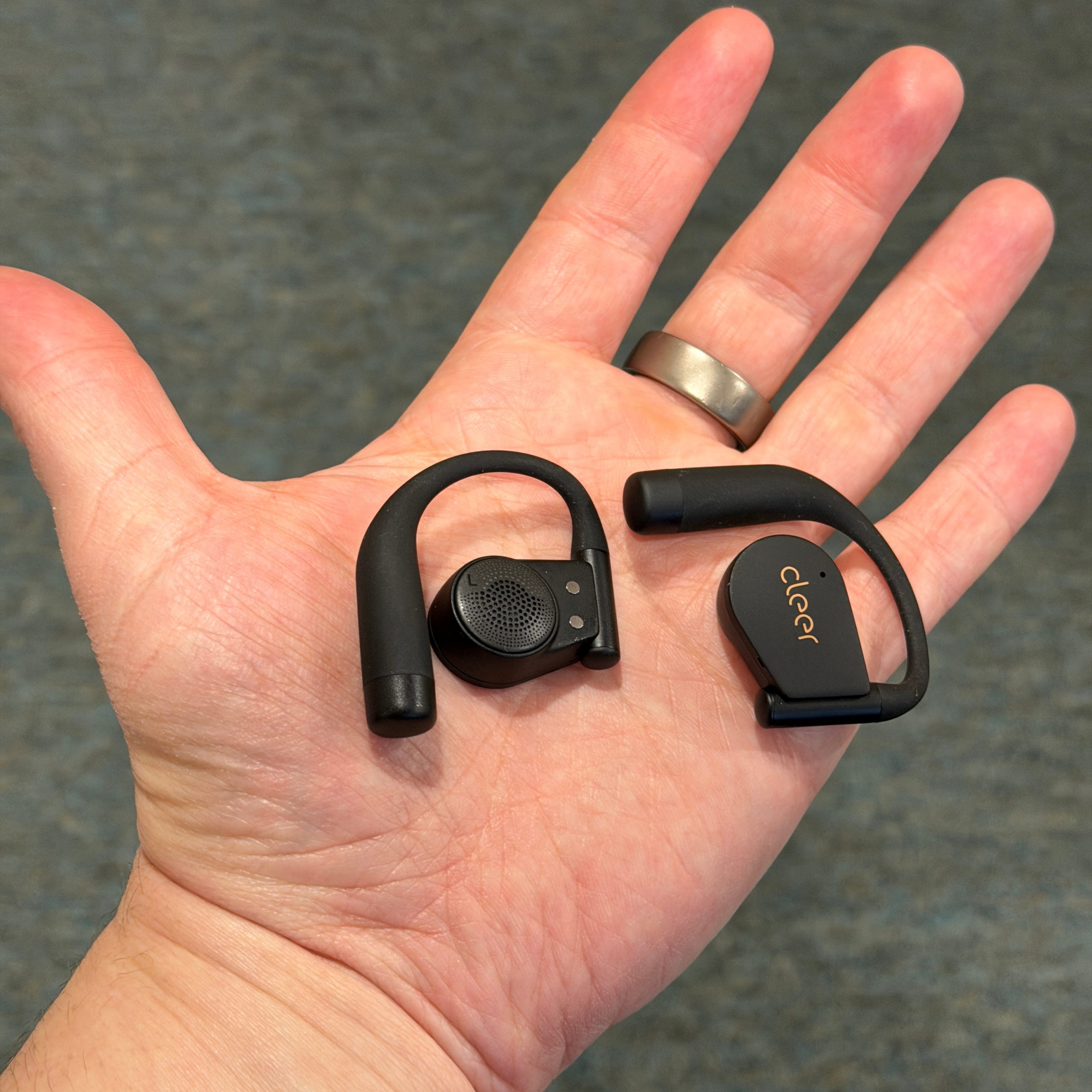
Cleer Audio is not as well-known a brand as Bose or Sony, but it was one of the early pioneers of the on-ear earbud design with the ARC back in 2021. While Cleer now has plenty of competition — I have at least a half dozen similar products in a pile in the corner of my office — Cleer has been continually iterating on the concept ever since. Cleer calls these “Open Ear Headphones,” but they aren’t headphones — they’re earbuds that sit on the outside of your eardrum, with stems that wrap around your earlobes to hold them in place. I’m going to call them “nearbuds” because they’re earbuds that sit near your ears. The advantage to this design is that it doesn’t block the ear canal, so you don’t need a transparency mode to hear your surroundings — perfect for walking, jogging, or running, but also for listening to music or podcasts around the house while still being able to hear if someone else in the home is calling for you. Some people also find stuffing things inside their ear canal extremely uncomfortable, and this design avoids that problem without the bulk of traditional on-ear or over-the-ear headphones.
There are inherent disadvantages to this design as well. The biggest problem is that noise cancellation is generally ineffective, so the design doesn’t work in loud environments like subways, gyms, or even some city streets. However, comfort, immersive audio, bass, and overall sound quality have been issues with past on-ear earbuds, too. The ARC 4 Plus doesn’t try to fix noise isolation, but it makes major strides in comfort and sound quality and adds Dolby Atmos for immersive audio along with THX for branding? Specs compliance? I wasn’t sure.
I have tested every Arc generation, and the biggest improvement over the years is comfort: the first generation was legitimately painful, but with each subsequent update the stems that wrap around your ears have gotten softer and more pliable. Cleer improved the earpiece positioning so that it sits on your ear without clamping pressure; this counterintuitively makes the around-the-ear design feel more secure if you wear it while exercising or eating. Finally, weight has been reduced without negatively impacting battery life. The Arc 4 Plus are so light — just 11g on my scale — that I frequently forgot that I was wearing them. As a result, these are among the most comfortable audio-producing things you can put on your head of any kind. You can wear them all day long without issue.
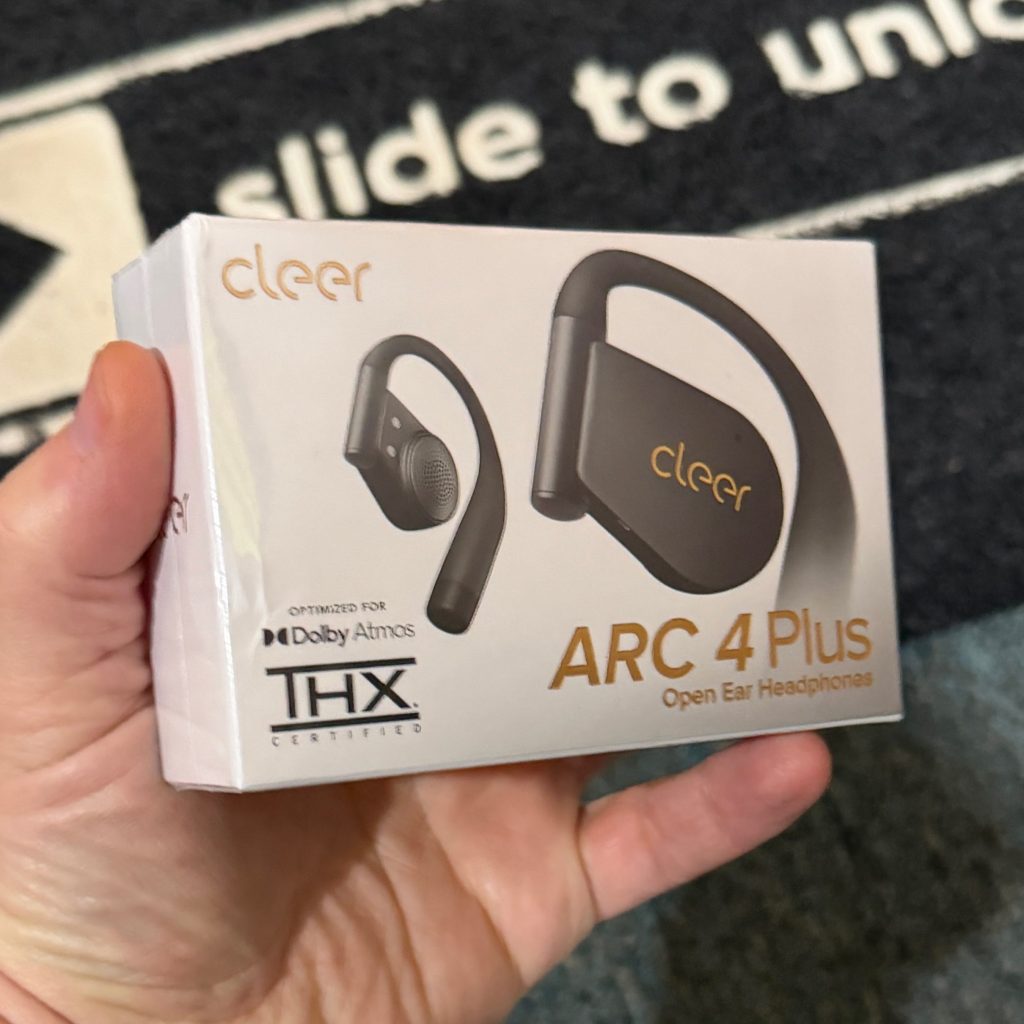
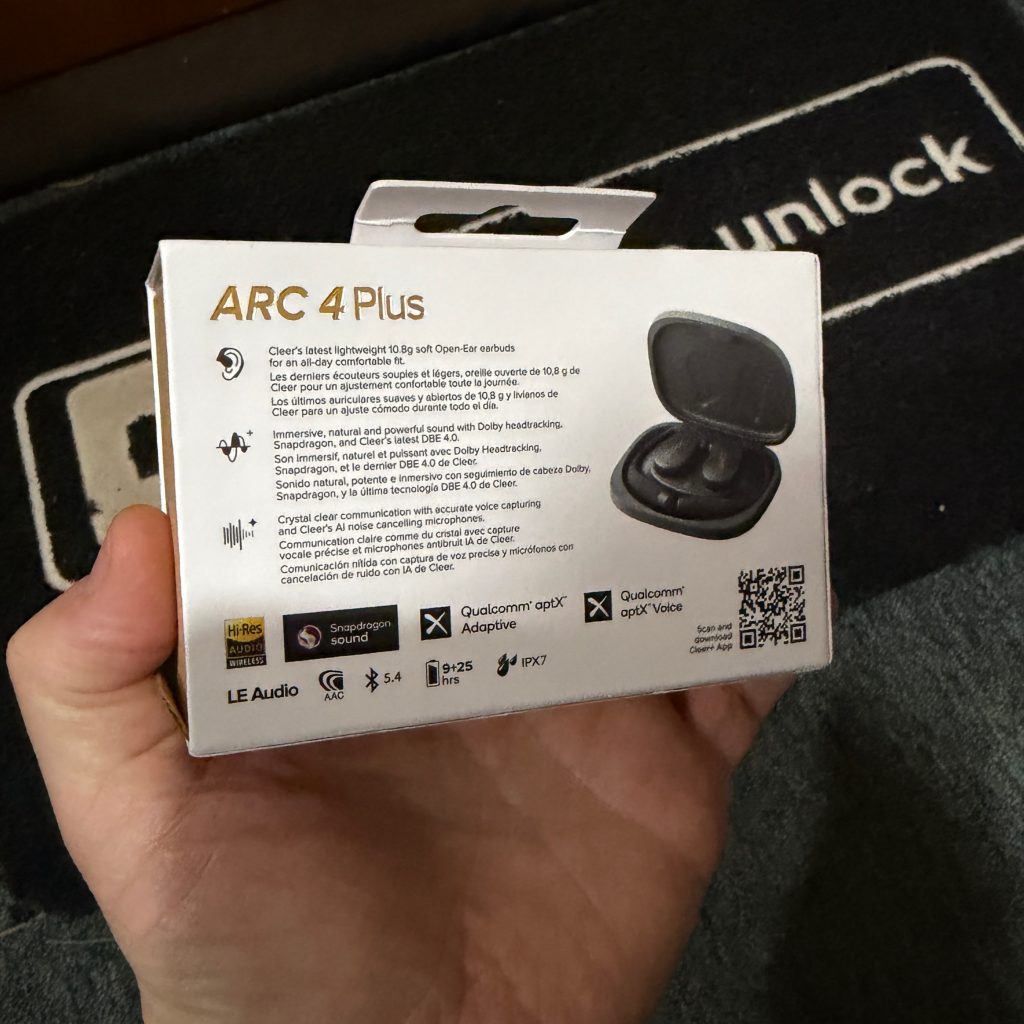
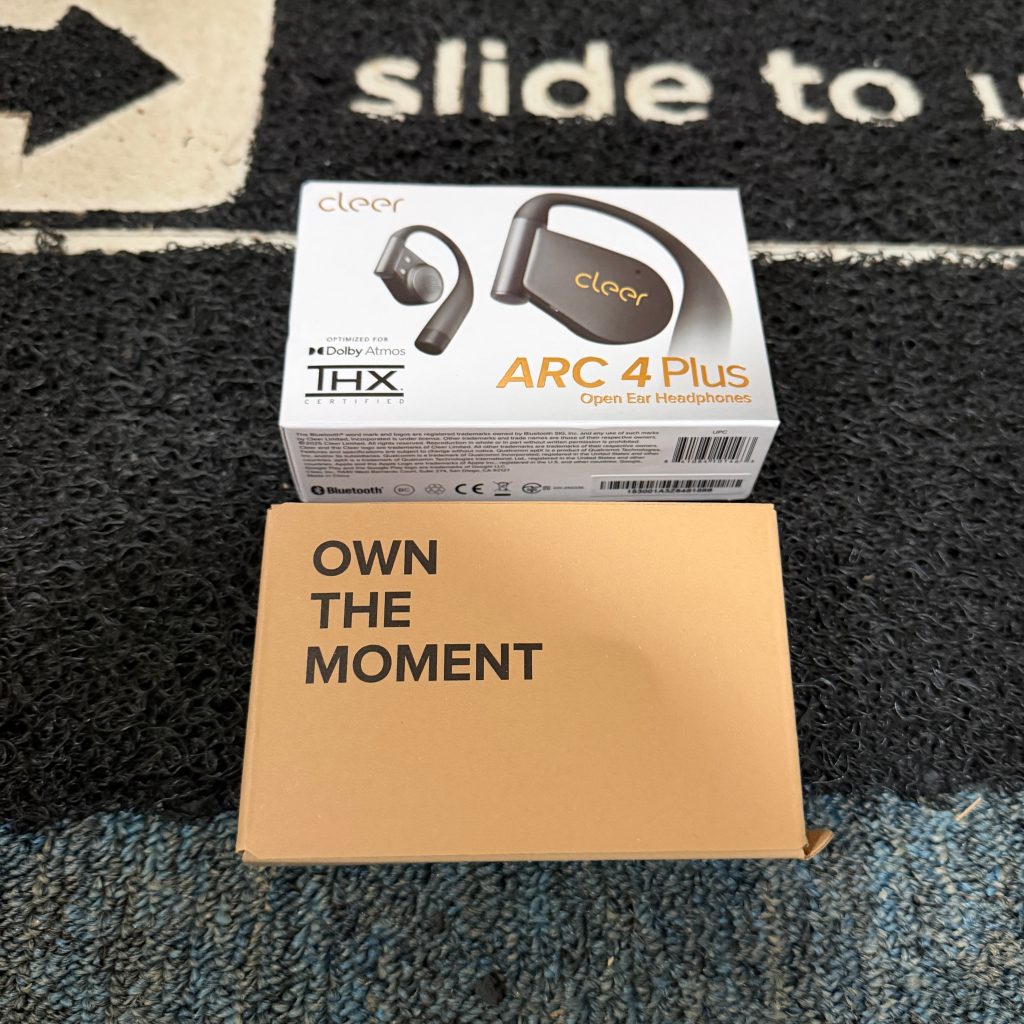
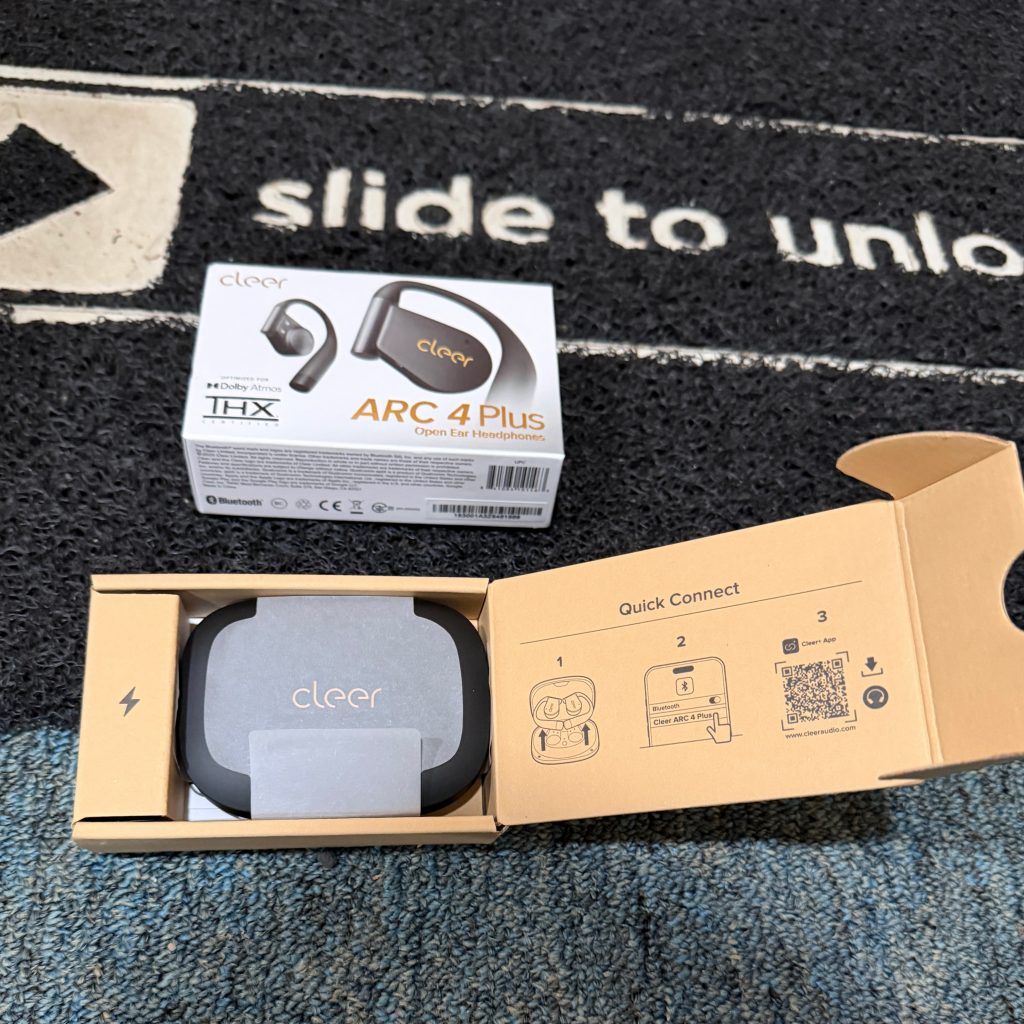
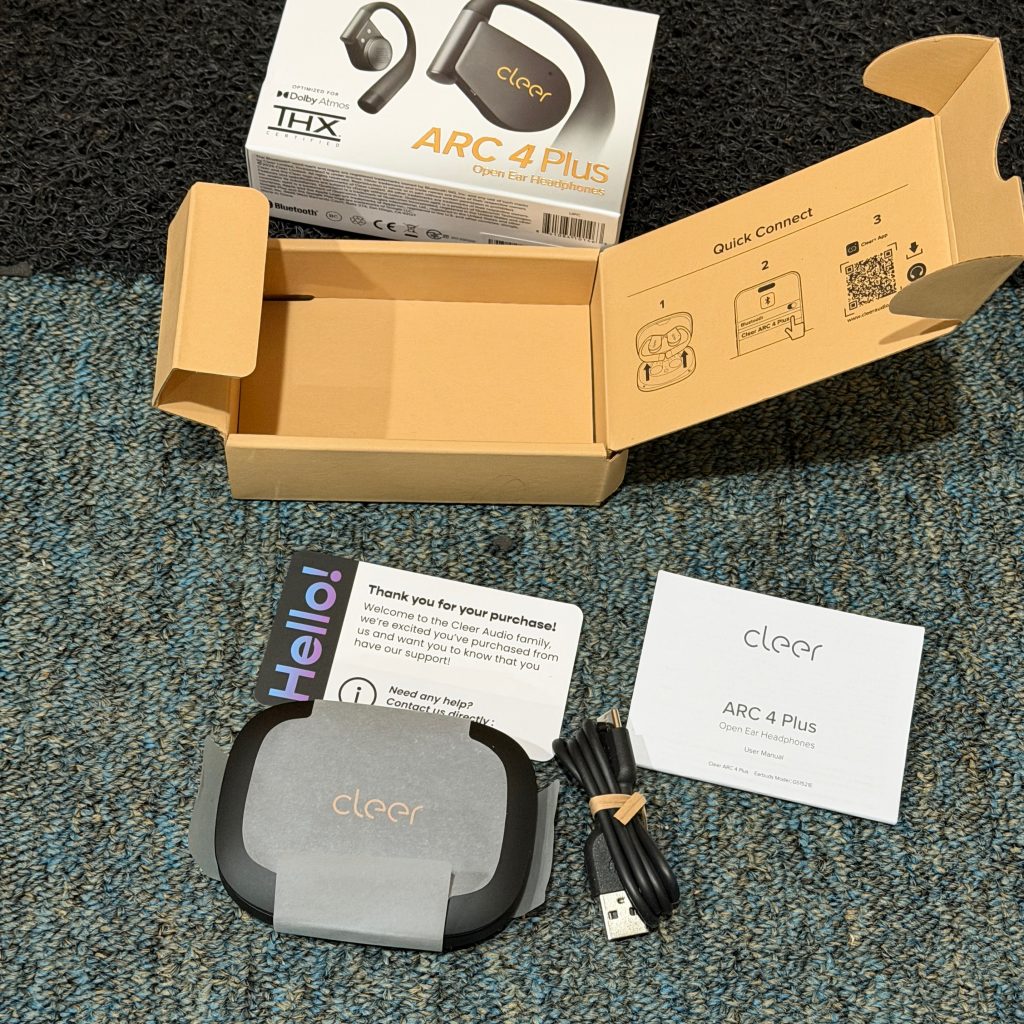
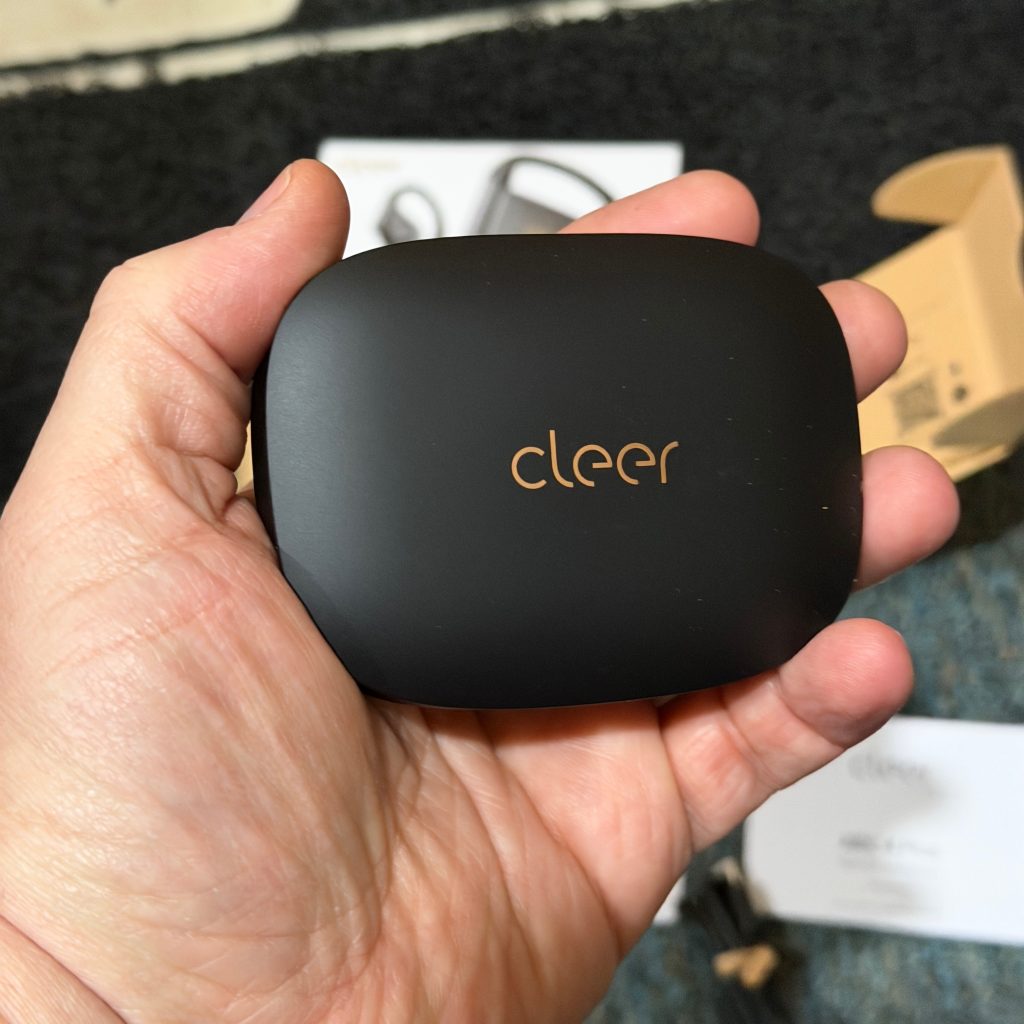
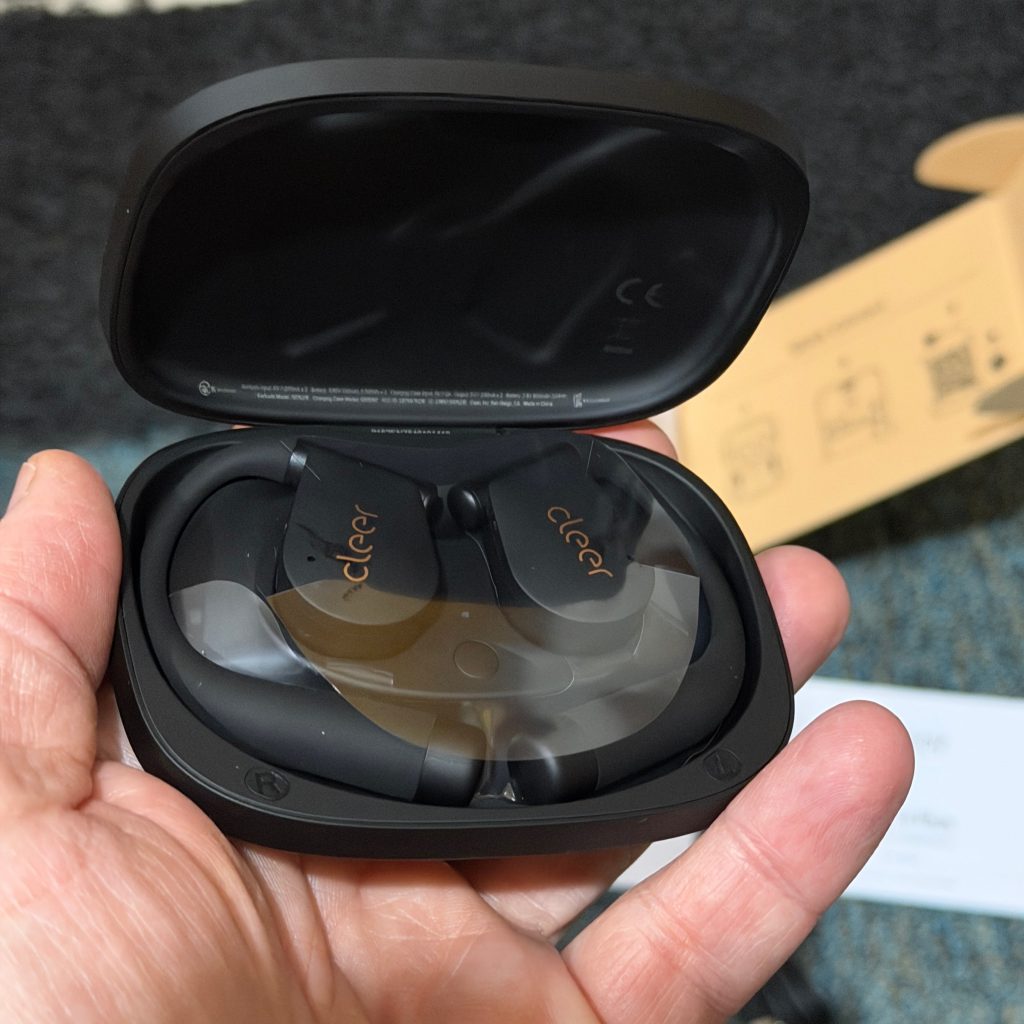
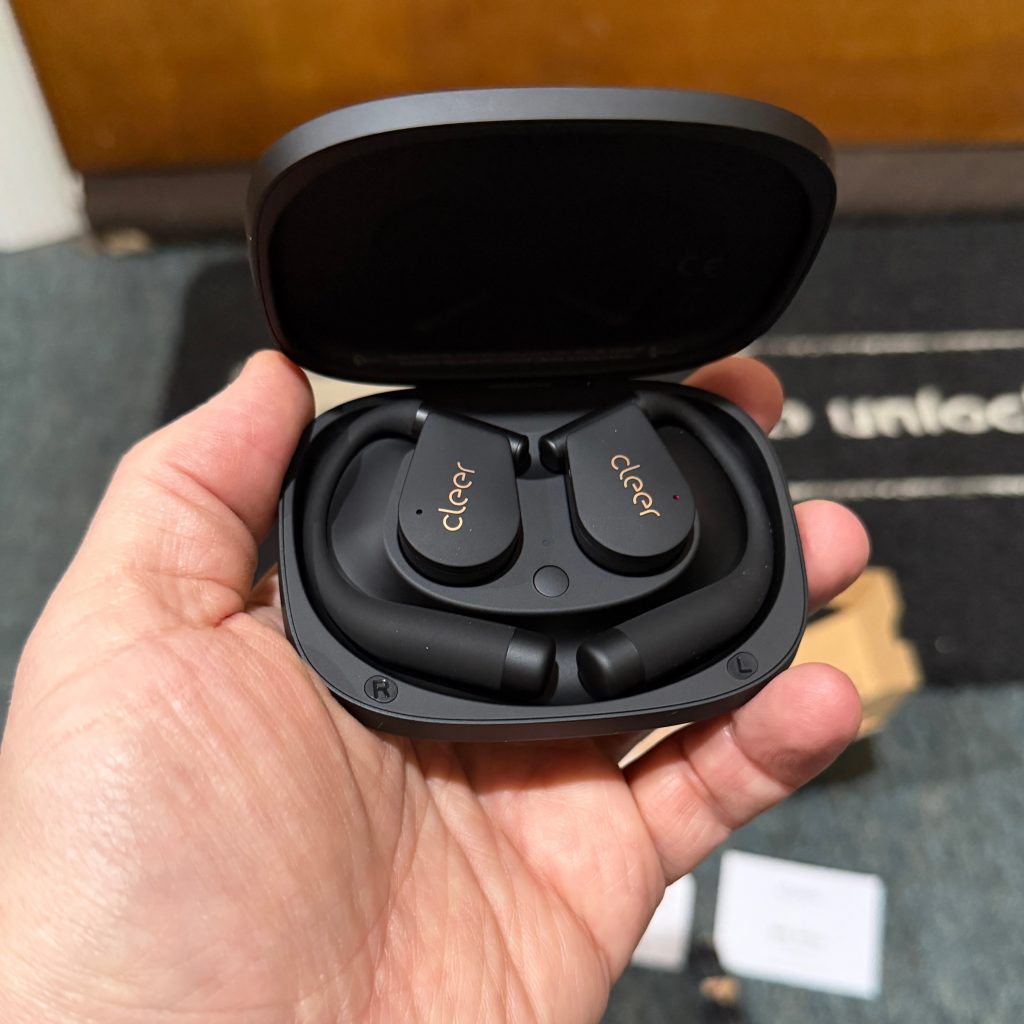

The Arc 4 Plus work fine with iOS and Android – I tested them with an iPhone 17 Pro and a Samsung Galaxy S26 Ultra – but also they have a trio of Qualcomm features I wanted to test out: Snapdragon Sound, Qualcomm aptX Adaptive, and Qualcomm aptX voice. Qualcomm has several phone brands with support for Snapdragon Sound – and some ASUS laptops – but aside from Motorola, most are primarily available in Asia, not the U.S. in China. So I pulled out my Motorola razr ultra …and couldn’t hear any difference over the Galaxy S26 Ultra. There was also no Snapdragon Sound app or indicator of which codecs are in use.
For music, I listened to tracks on Amazon Music in highest quality settings, and focused on tracks available in Ultra HD or Dolby Atmos. The bass response is hard to believe. No, it’s not quite as deep as sealed eardrum designs, but for most genres – including club and hip hop – the bass is louder and cleaner than this type of design has any right to produce. The White Stripes Ball and Biscuit sounds so rich and clean – with such a powerful drumkit – that you could swear that more than just Meg and Jack are playing. Spacial audio in Dolby Atmos provides even better imaging. Elton John’s Rocket Man Atmos remaster features an expansive soundstage, clear instrument separation, and rich mid-bass. There’s a bit missing from the treble compared to reference monitors, but for open-ear designs this is remarkable. Time by Pink Floyd starts with clocks and bells that are arrayed around in space, then moves to bass that is everywhere, and toms that appear to be slightly behind me somewhere inside my head. It’s trippy. Moving away from classic rock, on a Nikki Minaj track you could clearly hear the nuances of her inflections during rapid rapping.
Of course, Dolby Atmos started out as a movie soundtrack format, and listening to movies with Dolby Atmos on the Arc 4 Plus is a treat. The Family Madrigal song from Encanto is congested with a constantly changing rhythm section, multiple singers and children interrupting with questions, and sound effects tied to the song, with each singer clearly placed in space. Atmosphere was even more pronounced in the opening scene of Raiders of the Lost Ark, where birds and bugs and monkeys surround you with John Williams’ score in the background until a gun cocks and Indy’s whip cracks.
The Arc 4 Plus are rated at IPX7 for water resistance; you obviously won’t be going swimming with them but rain and sweat should be non-issues. Battery life is quoted at 9 hours per session and 25 hours with recharging from the case’s battery. I didn’t do a formal rundown test but runtime definitely appeared to be accurate – there is plenty of room for battery in this design and no ANC to drain it quickly. My initial review sample was defective and the right earbud refused to charge; Cleer sent a replacement and it was fine. The case does not have wireless charging. It should. I also wish Cleer had reversed the placement of the earbuds in the case: the left earbud is on the right, the right earbud is on the left, and my brain could not master removing them and placing them on the correct side of my head consistently. I also struggled (mentally) to put them back in the case in the correct orientation. Maybe over a longer timeframe muscle memory will develop, but it didn’t during my review period.
The microphone is just OK; it adds just a hint of artificial tone to my voice. It should be fine for phone calls, but this isn’t the earbud you want to use when you’re recording a podcast.
The Cleer Audio ARC 4+ cost $130 and are easy to recommend if you’re looking for an open-ear design. Non-affiliate link to Cleer’s product page
Disclosures: Cleer sent the ARC 4+ for review but Devices View does not accept paid posts, does not participate in affiliate link programs, and Cleer had no editorial control over this article. Cleer is not a Techsponential advisory client.