The OnePlus 15 offers specs you simply don’t find on other smartphones outside of China. U.S. carriers aren’t offering this one, either, but consumers can buy them directly. Finally. After a month of teasing and then a formal announcement, OnePlus had to wait for the U.S. government to reopen so the FCC could rubber stamp its approvals for sale in the U.S. In the meantime, OnePlus has started talking about the OnePlus 15R – a lower spec’d model – and the OnePlus Pad Go 2 tablet, but the OnePlus 15 is now available for general sale and it’s worth considering.
OnePlus 15 Firsts: Silicon
The OnePlus 15 is the company’s flagship and it gets flagship silicon: Qualcomm’s newest Snapdragon 8 Elite Gen 5. In the U.S., OnePlus is likely to have a monopoly on the Snapdragon 8 Elite Gen 5 for at least a month or two, while the OnePlus 15R is the global launch partner for Qualcomm’s step-down Snapdragon 8 Gen 5. While there are other phones with the Snapdragon 8 Elite Gen 5 in Asia and Europe, this is extremely impressive silicon aided by OnePlus’ large vapor chamber and thermal design. The OnePlus 13 is no slouch, but in my testing the OnePlus 15 benchmarks 20% higher on single-threaded CPU, over 17% higher on multi-threaded CPU, and a huge 34% increase in GPU. That puts the OnePlus 15 on par with the iPhone 17 Pro for single-threaded tasks and 13% faster on multi-core. It appears to be about 10% faster on both CPU measures than MediaTek’s latest Dimensity 9500 that I tested in OnePlus’ sister product, the OPPO Find X9 Pro. On GPU benchmarks MediaTek and Qualcomm are neck and neck; comparisons to the iPhone aren’t apples to Apple because of the different software architectures; on paper, Apple remains well ahead.
To keep that chipset cool, OnePlus has “360 Cryo-Velocity Cooling,” which is marketing gobbledygook for putting aerogel in between the silicon and a vapor chamber. Whatever it is seems to work, because in repeated benchmarks, the OnePlus 15’s Snapdragon 8 Elite Gen 5 outperformed another BBK sister product with the same silicon, the realme GT 8 Pro. Techsponential has a lot of extremely similar-looking BBK smartphones in for comparison, and it’s interesting to see how the company prioritizes different components to target each brand at a different audience. The OnePlus 15’s display can hit a 165Hz refresh rate and OnePlus pairs it with a 3200Hz touch response chip; by combining those components with the best Snapdragon and effective cooling, the OnePlus 15 performs like a dedicated gaming phone, only with mainstream looks and marketing.
OnePlus is using its own Wi-Fi chip in the OnePlus 15, which the company claims is “50% Faster.” I did not find this to be the case. When I tested it on my Wi-Fi 6e network**, I got 9% faster average download speeds on both an iPhone 17 Pro and a Samsung Galaxy Z Fold7. The OnePlus 15 was faster than the Apple and Samsung on uploads, but the speed advantage was 10 – 20%, not 50%. OnePlus is also claiming that the OnePlus 15 has a “UAV-Grade” Gyroscope for improved precision and I’ll take their word for it; this is not a consumer pain point or purchase decision driver.
OnePlus 15 Firsts: Durability
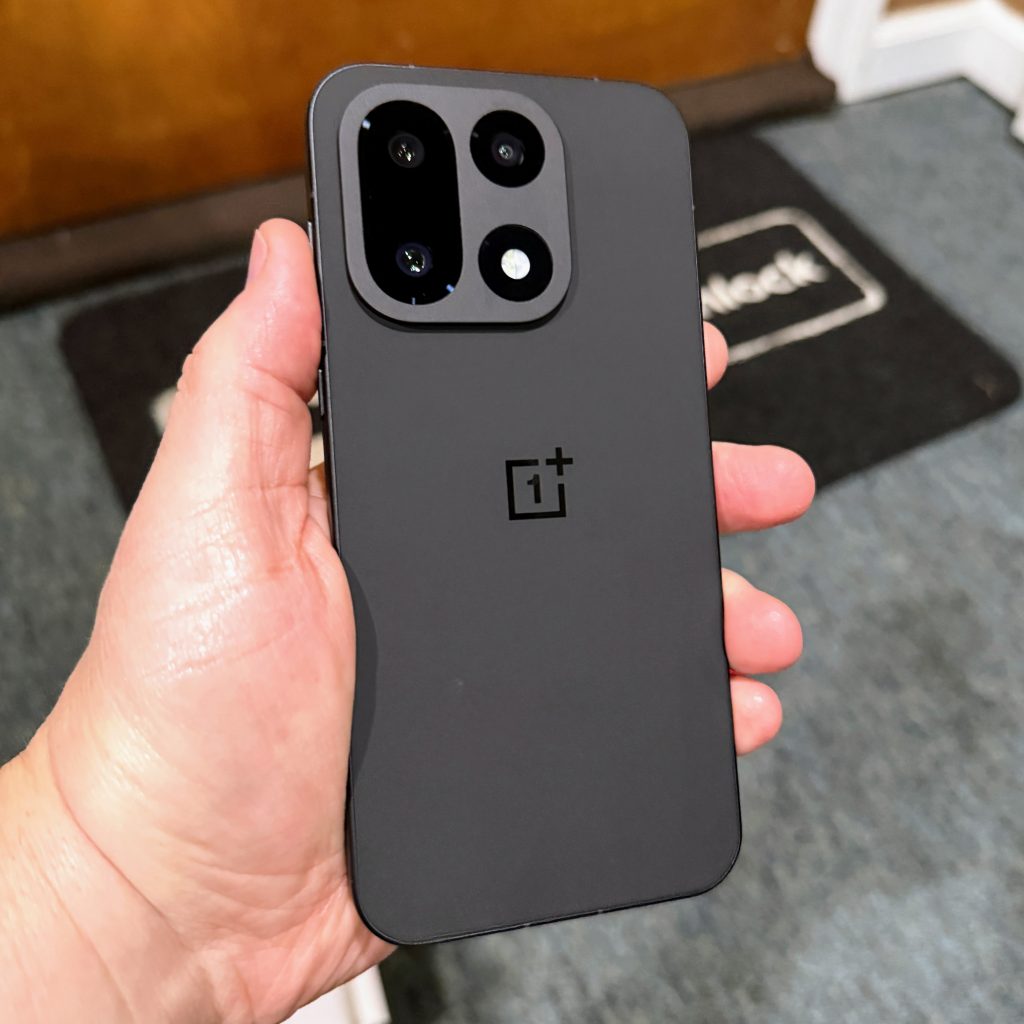
For the Sand Storm colorway, OnePlus is using micro-arc oxidation finish that feels soft to the touch that is also somehow so hard that scratches from things like keys rubs off because it’s the key that is losing material, not the phone. However, my Infinite Black review unit got scratched up quickly and I wasn’t conducting durability tests, I just had it in my pocket with other phones and my car keys.
The front of the OnePlus 15 is covered with Corning Gorilla Glass Victus 2, and the phone is certified IP68, IP69, and IP69K for protection against dust, water, and even high pressure hot water. About the only thing that OnePlus discourages is seawater, but if you drop your phone in duck sauce or a toilet you can clean it off by sticking it in the dishwasher. Really.
OnePlus 15 Firsts: Battery
With ever-more-efficient silicon and small improvements to battery chemistry, smartphone battery life has grown over time – but these gains are often offset by the ever-increasing time we use our phones. The OnePlus 15 breaks this paradigm. It is the longest lasting smartphone I have ever tested. The 7,300 mAh Silicon NanoStack battery is the first time this battery technology is available in the U.S. and one of the biggest batteries in a flagship phone outside of China. Silicon carbon batteries offer significantly higher energy density in the same size package – in other words, bigger batteries in the same size phones, or the same size batteries in smaller devices. We have seen companies try both approaches, but most have been Chinese OEMs. For now, the big companies supplying the U.S. carrier market — Apple, Samsung, Lenovo’s Motorola, and Google – are sticking with older battery chemistry. Their reluctance is partly due to risk aversion – Samsung lived through the Galaxy Note7 and doesn’t ever want to do that again so it put rigorous processes in place – and battery longevity concerns. However, the bigger problem is supply chain logistics: Apple and Samsung collectively manufacture nearly a half billion phones a year, and there just isn’t enough capacity to supply that amount of volume.
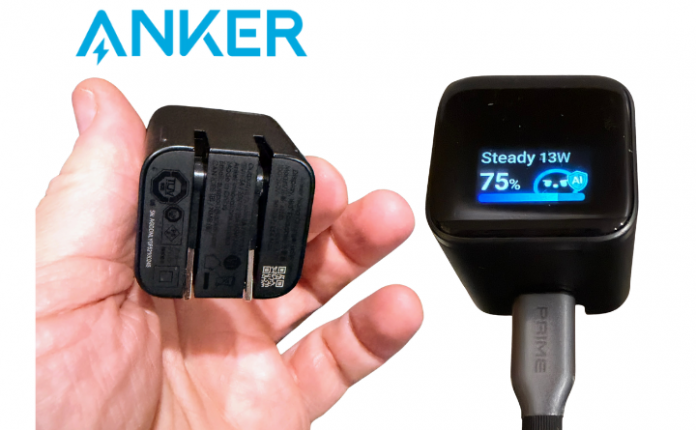
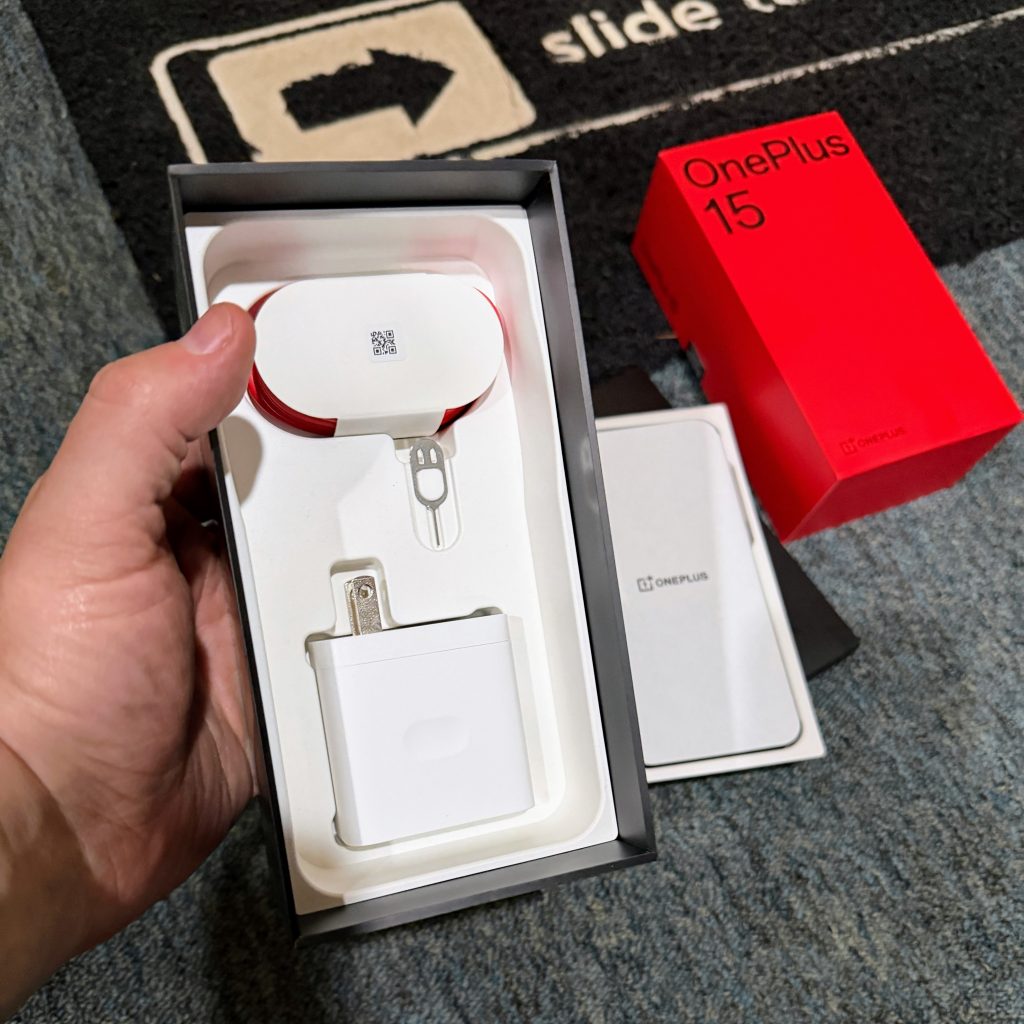
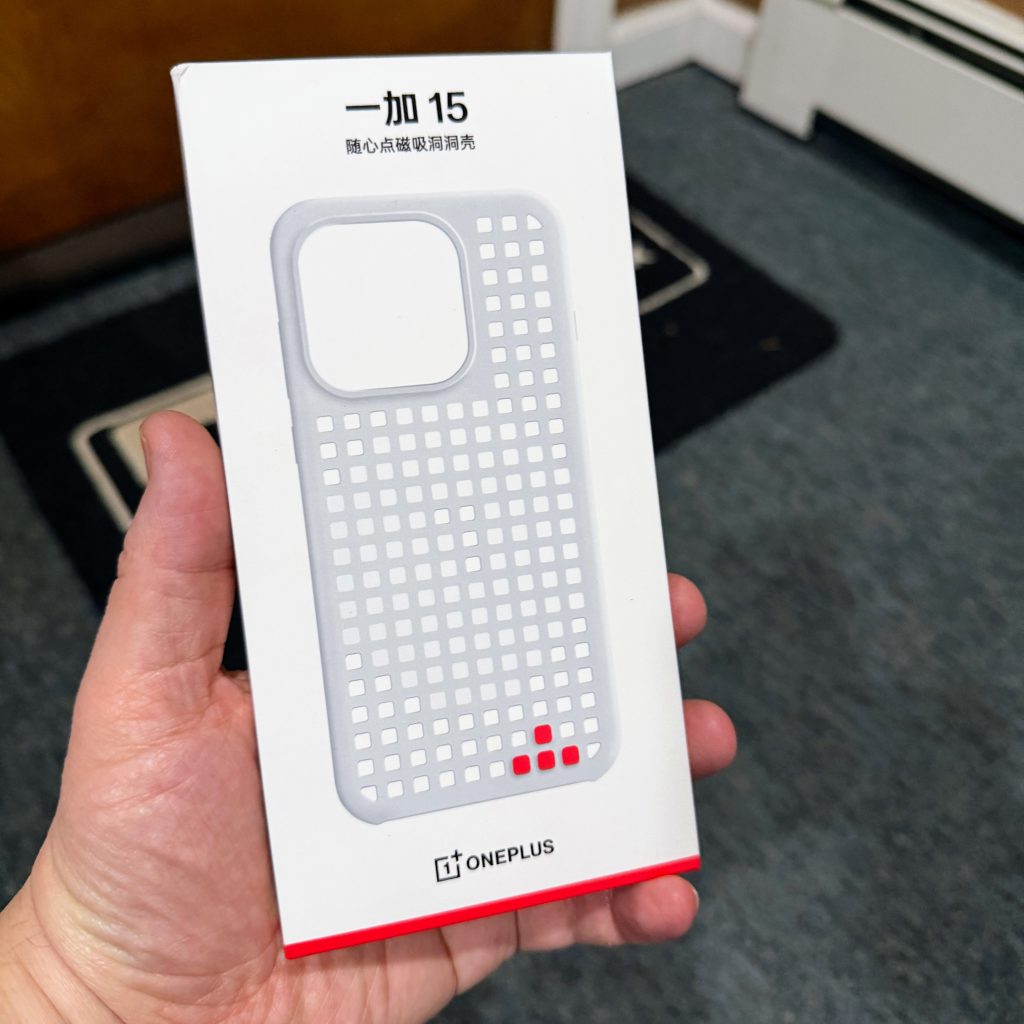
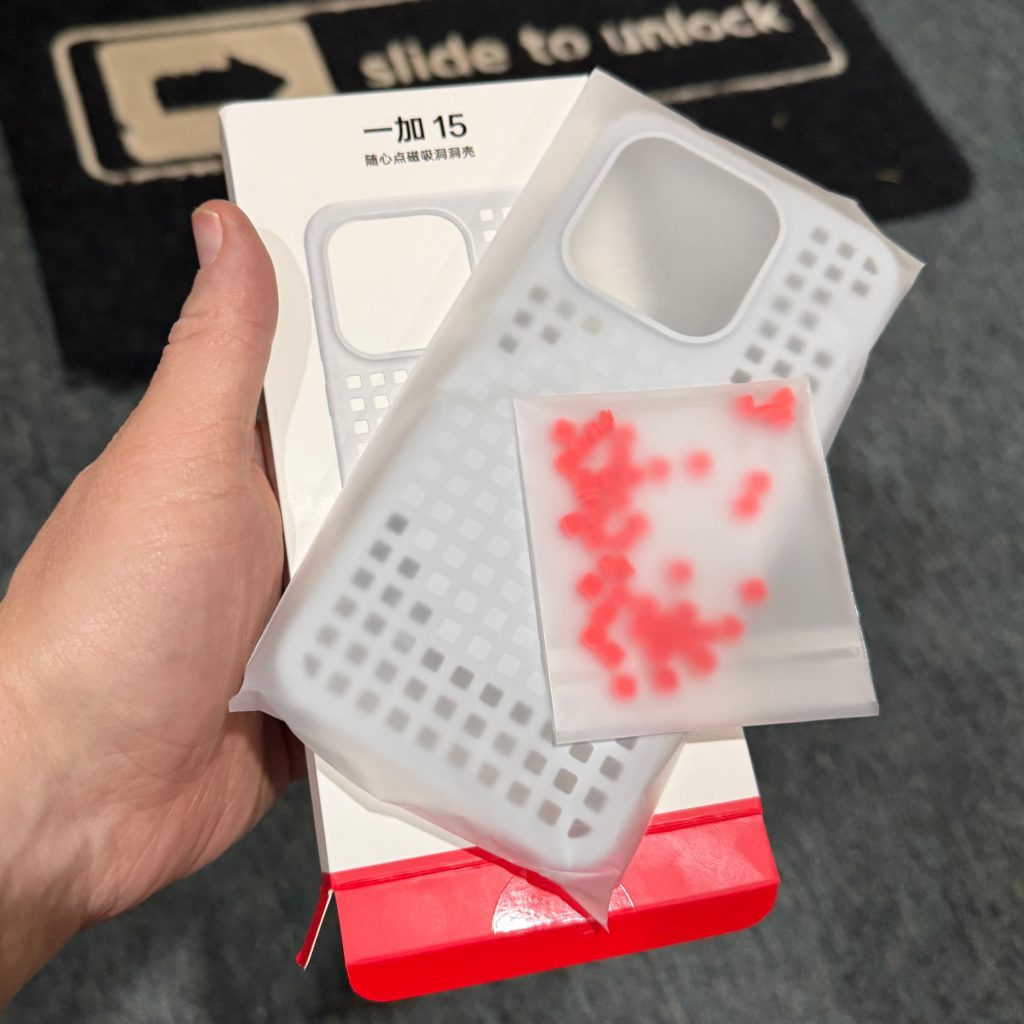
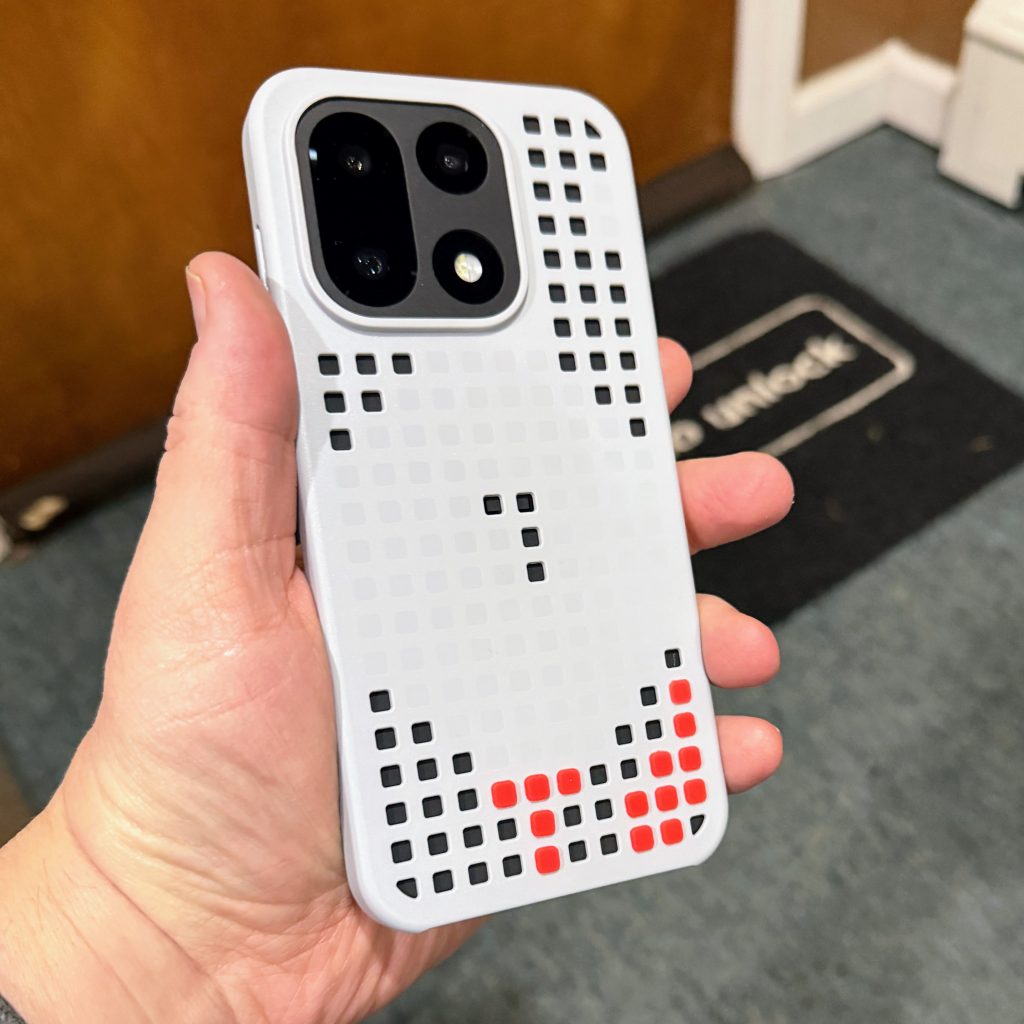
That’s a shame, because the battery in the OnePlus 15 is special. OnePlus rates it at up to 31 hours of video playback, but the better test is simply using it on a long, heavy day – complete with GPS navigation, extensive YouTube streaming, email, web browsing, banking, etc. – and still ending with 40% battery left. For regular use I did not need to charge up at the end of the day at all. When you do have to charge, the OnePlus 15 supports 120W SUPERVOOC charging to full in under 40 minutes using the included charger and cable. I found that it also supported extremely fast charging when connected to a high-capacity Anker charger and high current USB-C cable. If you spring for a 50W AIRVOOC wireless charger accessory, the OnePlus 15 can charge up to 50% wirelessly in the same 40 minutes. This is Qi compatible and any modern wireless charger should work at slower speeds. However, to get Qi2 magnet alignment and compatibility with a wide range of charging accessories (i.e., Apple MagSafe) you’ll need to buy a case from OnePlus. This is one area where niche phone brands not sold at carrier retail have a clear disadvantage; the selection of third-party cases is quite limited. OnePlus sent over its own Hole Pattern Magnetic Case and I confirmed that it locks to the magnets in Anker’s Prime Wireless Charging Station. I was also able to customize the case with the included rubber “pixels” to create a mini-Techsponential logo. Fun!
Camera Shy
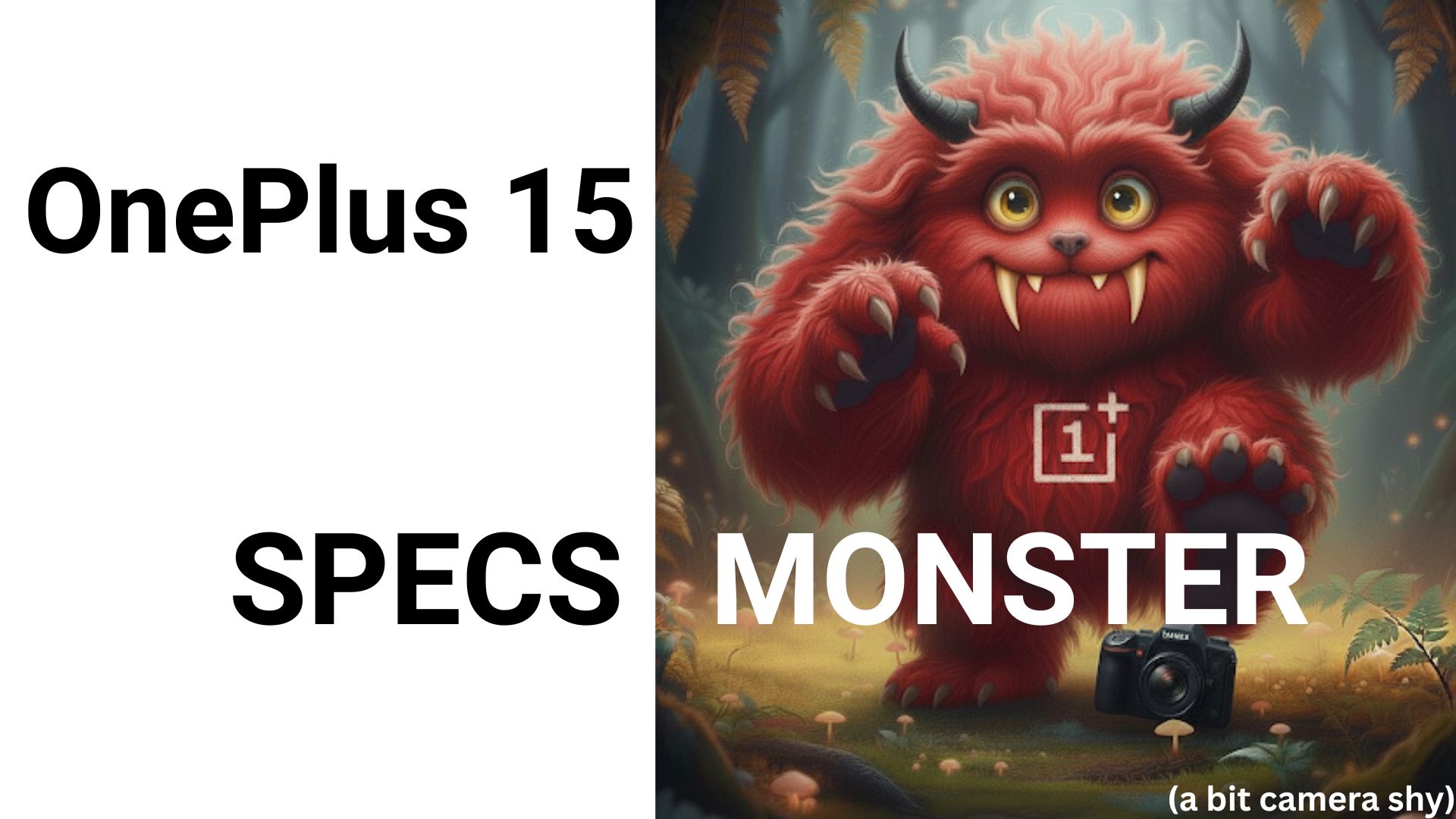
I used my review unit for nearly two months as a primary camera for product shots and travel. Some past OnePlus flagships have been criticized for relatively poor camera quality, and that is not the case here. The triple 50 MP layout provides a strong technical basis, and results are good. However, the cameras are not best of breed, or even BBK’s best – in my testing, that would be the OPPO Find X9 Pro.
I took the OnePlus 15 to a T-Mobile press conference and the LVGP race in Las Vegas, and the OPPO Find X9 Pro was able to capture F1 cars speeding by at nearly 200 MPH that were just blurs on the OnePlus 15 and iPhone 17 Pro no matter what settings I used on either. On the other side of the country, the OnePlus’ 50 MP 3.5X telephoto pictures of the Manhattan skyline were good, but not as crisp as Google’s Pixel 10 Pro or as detailed as Apple’s iPhone 17 Pro. Regular portraits from the main OnePlus 15 camera have nice detail but the equivalent from OPPO Find X9 Pro or even the iPhone Air’s single camera often had more depth and color accuracy. Despite OnePlus’ custom RGBW sensor on its 32MP front camera, Apple also wins on selfies, even on the base iPhone 17. The OnePlus 15 is wildly flexible for video capture, but the iPhone remains superior on exposure, motion, color, and low light detail. The OnePlus 15 cameras are not disappointing, but they are not standouts like the OnePlus’ processing, durability, or incredible battery.
OS and AI
OnePlus uses OxygenOS 16.0 on top of Android 16 which is clean, fast, and up to date. OnePlus promises to keep things that way for four years and two additional years of security updates. This is longer than a single owner is likely to keep the phone, but falls short of Google, Samsung, and Apple. It is also effectively a tacit acknowledgement that OnePlus resale values are not great.
OnePlus has AI features and a dedicated Plus Key to invoke them because of course it does, but in my daily use I primarily used Google’s Gemini on its own, not in OnePlus’ Mind Space.
Value Proposition
It is easy to see who the OnePlus 15 is aimed at: someone who prioritizes performance but doesn’t want a strange blocky gaming phone. Anyone who wants a good camera but prioritizes battery life. However, buyers will need to be able to afford to purchase the OnePlus 15 without carrier subsidies, so ideally you’ll want to connect it to a carrier plan that reward bringing your own phone.
The OnePlus 15 has full U.S. and Canadian wireless band support and is sold direct online and at Best Buy. Given the performance, durability, and battery life, OnePlus is pricing the OnePlus 15 fairly – if you value its unique attributes, it could even be considered a bargain. Google’s Pixel phones cannot compete with the Snapdragon 8 Elite Gen 5. Samsung’s Galaxy S line lacks the OnePlus’ extreme battery life. Nobody recommends that you sanitize an iPhone in a washing machine. OnePlus is pricing the base 12GB RAM / 256GB storage version at $900, while the 16GB RAM / 512GB storage version is only $100 more – for now. With memory prices soaring, I would buy the higher end model quickly before OnePlus is forced to adjust its pricing.
Disclosures: OnePlus sent the OnePlus 15 and Hole Pattern Magnetic Case for review. Devices View does not accept paid posts, does not participate in affiliate link programs, and OnePlus had no editorial control over this review. This review is a consumer version of an industry analyst report with additional context published here at Techsponential. OnePlus is not a Techsponential client.
*The display normally runs at 1 – 120 Hz, with the variable refresh rate helping battery life and can lock into 120FPS for many games. On a limited number of games, the display can be pushed to 165Hz.
**This was tested with multiple SpeedTests away from the router on an eero Wi-Fi 6e mesh system connected to 1Gbps Verizon Fios. I will be upgrading Techsponential’s network to a TP-Link Wi-Fi 7 mesh system in for review shortly, but for the purposes of this test the more common spec made more sense. The Apple and Samsung phones are in a different price class than the OnePlus 15, but not because of their Wi-Fi chipset. It is possible that there is a 50% speed improvement over the Wi-Fi in the OnePlus 13, as I didn’t have my OnePlus 13 phone on hand during testing to check.